units:60th_new_york_infantry
Differences
This shows you the differences between two versions of the page.
| Both sides previous revisionPrevious revisionNext revision | Previous revision | ||
| units:60th_new_york_infantry [2019/03/11 14:44] – admin | units:60th_new_york_infantry [2026/01/21 16:16] (current) – external edit 127.0.0.1 | ||
|---|---|---|---|
| Line 1: | Line 1: | ||
| - | WIKIPEDIA - "The 60th New York Infantry | + | ====== |
| - | The regiment was attached to Dix's Division to March 1862. Railroad Brigade, Army of the Potomac, to June 1863. 2nd Brigade, Sigel' | + | Service at Relay House, 11/ |
| - | The 60th New York Infantry mustered out of service July 17, 1865. | + | [[60th New York Primary Sources|Primary Sources]]\\ |
| + | [[60th New York Secondary Sources|Archival and Secondary Sources]]\\ | ||
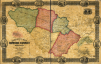
| - | Detailed service | + | The 60th New York Infantry was mustered into the Union army in late October of 1861 in St. Lawrence County, on the banks of the St. Lawrence Seaway. The majority of men in the unit were from St. Lawrence County, but men from all three of the northernmost counties of New York were represented. Like many other newly formed units, the 60th was detailed for guard duty rather than combat. The 60th was assigned to General John A. Dix's Division after mustering in, and left for Baltimore to join the Railroad Brigade, tasked with guarding important railroad sites between Baltimore and Washington, D. C. |
| - | Left New York for Baltimore, Md., November 4, 1861. Duty at Baltimore, Md., and between there and Washington, D.C.; also at Relay House, Md., and Harpers Ferry, Va., until June 1862" | + | Travelling to New York City on steamers and barges, they were greeted by crowds at every stop - and in between. In New York City, they marched in a parade and received ceremonial flags. Then by railroad to Jersey City and Philadelphia, and then finally through Baltimore to Washington, D. C., where they camped on Kalorama Heights, three miles from the city. A week later, the regiment moved back north to the Relay House, in present day Elkridge, Md. |
| + | Historians researching the 60th New York are particularly thankful that their chaplain was a man named Richard Eddy. Eddy went on to be a well-known clergyman and wrote several books on Universalism. He wrote regular letters to home town newspaper, the //St. Lawrence Republican// | ||
| - | Company A - principally recruited | + | In his first letter to the // |
| - | Company B - principally recruited in St. Lawrence County\\ | + | |
| - | Company C - principally recruited in St. Lawrence County\\ | + | |
| - | Company D - principally recruited in St. Lawrence County\\ | + | |
| - | Company E - principally recruited in Franklin County\\ | + | |
| - | Company F - principally recruited in St. Lawrence County\\ | + | |
| - | Company G - principally recruited in St. Lawrence County\\ | + | |
| - | Company H - principally recruited in Clinton County | + | |
| - | Company I - principally recruited in St. Lawrence County\\ | + | |
| - | Company K - principally recruited in St. Lawrence County\\ | + | |
| + | "Our camp has been over run with peddlers, some of whom would not only like to take our money, but also our lives. This morning as one of the men was about preparing to cook a cabbage, he had bought of our visitors, he noticed that a portion of the pith had been cut out, and some black powder-like substance had been inserted, and the plug again nicely fitted to its place. Dr. Gale gave it as his opinion that judging from appearance, the foreign substance was Cobolt. It was sent to the city to be analyzed. Shortly after another vegetable of the same sort was found infected in the same way, whereupon an awful decimation of Cabbage heads ensued. They were terribly cut up and scattered." | ||
| - | <figure label> | + | Fear of poisoning by the local " |
| - | {{:{{ : | + | |
| - | < | + | |
| - | </ | + | |
| - | <figure label> | + | Eddy also describes a horrific injury suffered by William H. McDonald, of Brasher, NY. McDonald made the mistake of lying down on the railroad tracks where he soon fell asleep. Unfortunately a train came by and mangled his right foot, which had to be amputated. Injuries such as these were fairly common in the camps. |
| - | {{:{{ : | + | |
| - | < | + | |
| - | </ | + | |
| - | <figure label> | + | A few weeks later, growing discontent among the officers of the unit towards the conduct of their Colonel, William B. Hayward, boiled over. A letter was sent to Hayward, signed by every Captain and Lieutenant in the unit, asking the Colonel to resign as commander of the 60th New York. The letter stated: "You, Colonel, have shown a want of coolness and discretion, and excitability and irritability, |
| - | {{:{{ : | + | |
| - | < | + | |
| - | </ | + | |
| - | <figure label> | + | A correspondent to the // |
| - | {{:{{ : | + | |
| - | < | + | |
| - | </ | + | |
| - | <figure label> | + | On December 5th the men were paid off. $15,000 was paid to the Regiment, a majority of the money was immediately sent home. A sum of $460 was given to the Regimental Band, with a promise of $500 more, so they could purchase instruments. Aaron Geer of Company D died of typhoid fever and was buried in Loudon Cemetery. |
| - | {{:{{ : | + | |
| - | < | + | |
| - | </ | + | |
| - | <figure label> | + | A few weeks later, a member of Company B accidentally shot a solder of the Maryland Home Guard. The men were " |
| - | {{:{{ : | + | |
| - | < | + | |
| - | </figure> | + | |
| - | <figure label> | + | "A RUSSELL VOLUNTEER", |
| - | {{:{{ : | + | |
| - | < | + | |
| - | </figure> | + | |
| - | <figure label> | + | More disasters occurred in December. Private W. H. Morgan was shot and lost two fingers on his right hand. Private Edwin T. Porter was run over by a train, apparently while sleeping on the tracks. At the end of the month Holley Meacham (or Meachand), of Company K, died of Typhoid and was buried. Louis Dussie (or Dupra), of Company A, died of measles. Both men were buried in Loudon Cemetery. |
| - | {{:{{ : | + | |
| - | < | + | |
| - | </ | + | |
| - | <figure label> | + | Colonel Hayward' |
| - | {{:{{ : | + | |
| - | < | + | |
| - | </figure> | + | |
| - | <figure label> | + | "At an early hour this morning as the different companies were drawn up for inspection, they were told that their Colonel' |
| - | {{:{{ : | + | |
| - | < | + | |
| - | </ | + | |
| - | <figure label> | + | By early January the men of the 60th had just about finished building their winter barracks in various locations. Guard duty continued through January, as did the occasional death. John Forward, of Company F, was hit by a train, but survived with minor injuries. Lieutenant Colonel Goodrich took over for Hayward. |
| - | {{:{{ : | + | |
| - | < | + | |
| - | </ | + | |
| - | <figure label> | + | A humorous event occurred in January. A soldier on guard was approached in the dark; he was told to halt several times and, failing to do so, was shot by the picket. Upon investigation it was found that the guard had shot a wandering bull-calf. The soldier was kidded about the event the next day. |
| - | {{:{{ : | + | |
| - | < | + | |
| - | </ | + | |
| - | <figure label> | + | More deaths were still to come. Ozro C. Dunton died at the end of January. A few days later Edmund Mason died of " |
| - | {{:{{ : | + | |
| - | < | + | |
| - | </ | + | |
| - | <figure label> | + | Idle hands are the devil' |
| - | {{:{{ : | + | |
| - | < | + | |
| - | </ | + | |
| - | <figure label> | + | Eddy, a chaplain, attributed these offenses to rum drinking. "Our guard house would be all empty if it was not for intoxicating drinks, but I am pained to write that more men will in all probability be ruined by liquor while engaged in this war, than will be maimed or killed by powder and ball." |
| - | {{:{{ : | + | |
| - | < | + | |
| - | </ | + | |
| - | <figure label> | + | By March, rumors of an upcoming move had started. Men were still dying, Lieutenant H. C. Eastman, of Company K, died of typhoid. A new Colonel was appointed, Geo. S. Greene. Initial suspicion was soon replaced by respect, as the men got to know their new leader. Guard duty continued, and companies were moved around regularly along the railroad. Their new Colonel received a promotion and Goodrich became Colonel of the 60th. |
| - | {{:{{ : | + | |
| - | < | + | |
| - | </ | + | |
| - | <figure label> | + | In May the Regiment finally got their orders to move out. Six companies started for Harper' |
| - | {{:{{ : | + | |
| - | < | + | |
| - | </ | + | |
| - | <figure label> | ||
| - | {{:{{ : | ||
| - | < | ||
| - | </ | ||
| - | <figure label> | ||
| - | {{:{{ : | ||
| - | < | ||
| - | </ | ||
| - | <figure label> | ||
| - | {{:{{ : | ||
| - | < | ||
| - | </ | ||
| - | <figure label> | + | Recruiting Locations\\ |
| - | {{:{{ : | + | Company A - principally recruited in St. Lawrence County\\ |
| - | < | + | Company B - principally recruited in St. Lawrence County\\ |
| - | </ | + | Company C - principally recruited in St. Lawrence County\\ |
| - | + | Company D - principally recruited in St. Lawrence County\\ | |
| - | <figure label> | + | Company E - principally recruited in Franklin County\\ |
| - | {{:{{ : | + | Company F - principally recruited in St. Lawrence County\\ |
| - | < | + | Company G - principally recruited in St. Lawrence County\\ |
| - | </ | + | Company H - principally recruited in Clinton County and St. Lawrence County\\ |
| - | + | Company I - principally recruited in St. Lawrence County\\ | |
| - | + | Company K - principally recruited in St. Lawrence County\\ | |
| - | <figure label> | + | |
| - | {{:{{ : | + | |
| - | < | + | |
| - | </ | + | |
| - | + | ||
| - | <figure label> | + | |
| - | {{:{{ : | + | |
| - | < | + | |
| - | </ | + | |
| - | + | ||
| - | <figure label> | + | |
| - | {{:{{ : | + | |
| - | < | + | |
| - | </ | + | |
| - | + | ||
| - | <figure label> | + | |
| - | {{:{{ : | + | |
| - | < | + | |
| - | </ | + | |
| - | + | ||
| - | + | ||
| - | <figure label> | + | |
| - | {{:{{ : | + | |
| - | < | + | |
| - | </ | + | |
| - | + | ||
| - | <figure label> | + | |
| - | {{:{{ : | + | |
| - | < | + | |
| - | </ | + | |
| - | + | ||
| - | <figure label> | + | |
| - | {{:{{ : | + | |
| - | < | + | |
| - | </ | + | |
| - | + | ||
| - | <figure label> | + | |
| - | {{:{{ : | + | |
| - | < | + | |
| - | </ | + | |
| - | <figure label> | ||
| - | {{:{{ : | ||
| - | < | ||
| - | </ | ||
| - | <figure label> | ||
| - | {{:{{ : | ||
| - | < | ||
| - | </ | ||
units/60th_new_york_infantry.1552315470.txt.gz · Last modified: (external edit)