User Tools

Site Tools


start

Differences

This shows you the differences between two versions of the page.

Link to this comparison view

start [2019/06/08 19:20] adminstart [2026/01/21 16:58] (current) – external edit 127.0.0.1
Line 1: Line 1:
-<html><center><b><u><font size="+2">Howard County, MD, 1861-1865</font></u></b></center></html>+====== Howard County, MD, 18611865 ======
  
-Welcome to Howard County, MD in the Civil War. This site is an attempt to document the activity of every Civil War unit that spent more that a few days in Howard County during the War. Roughly 60 units spent between three days and eighteen months guarding the railroad in Howard County. Please contact <greg@hococivilwar.org> if you would like to volunteer to help transcribe War-time letters and articles to help make the information more accessible. \\  
  
 +Welcome to Howard County, MD in the Civil War. This site documents the activity of every Civil War unit that spent more that a few days in Howard County during the War. Roughly 60 units spent between three days and eighteen months guarding the railroad in Howard County. Please contact <greg@hococivilwar.org> if you have any information about Civil War activities in Howard County. \\ 
  
-<html><center><b><u><font size="+2">Civil War Activity in Howard County, MD, 1861-1865</font></u></b></center></html>+ 
 +====== Civil War Activity in Howard County, MD, 1861-1865 ======
  
  
 Howard County in 1861 was a peaceful, sleepy place. With a population of around 13,000 people, including 2,800 slaves and 1,300 free blacks, its largest town was Ellicott's Mills, with 1,444 people. Smaller towns, Annapolis Junction, Woodstock, Marriottsville, and Elk Ridge Landing, were situated along the Baltimore and Ohio Railroad heading west along the Patapsco River, or the Washington Railroad, heading south towards the nation's capital. These rail links were a vital lifeline transporting men and matériel from the industrial and populous North to the fighting units on the border with the newly formed Confederacy. Howard County in 1861 was a peaceful, sleepy place. With a population of around 13,000 people, including 2,800 slaves and 1,300 free blacks, its largest town was Ellicott's Mills, with 1,444 people. Smaller towns, Annapolis Junction, Woodstock, Marriottsville, and Elk Ridge Landing, were situated along the Baltimore and Ohio Railroad heading west along the Patapsco River, or the Washington Railroad, heading south towards the nation's capital. These rail links were a vital lifeline transporting men and matériel from the industrial and populous North to the fighting units on the border with the newly formed Confederacy.
  
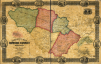
-{{ :map.jpg?600 |Philadelphia Inquirer September 13, 1862}}+{{ :map.jpg?600 }} 
 + 
 +//Philadelphia Inquirer September 13, 1862//
  
 The Battle of Fort Sumter on April 12, 1861 began the Civil War. President Lincoln called for 90 day militia units to suppress the rebellion. On April 17, the 6th Massachusetts Militia, responding to Lincoln's call, arrived in Baltimore on their way to Washington D. C.. Two days later, while marching through the city, a mob attacked four companies of the Militia, killing four soldiers. In returning fire, twelve civilians were killed.  General Benjamin F. Butler, of the 8th Massachusetts Infantry, was ordered to secure the railroad links between Baltimore and Washington D. C. He marched his unit, along with the 7th New York Militia to Annapolis Junction, in Howard County, where the Washington Railroad met a branch railroad to Annapolis. These soldiers became the first non-native soldiers to camp in Howard County. The Battle of Fort Sumter on April 12, 1861 began the Civil War. President Lincoln called for 90 day militia units to suppress the rebellion. On April 17, the 6th Massachusetts Militia, responding to Lincoln's call, arrived in Baltimore on their way to Washington D. C.. Two days later, while marching through the city, a mob attacked four companies of the Militia, killing four soldiers. In returning fire, twelve civilians were killed.  General Benjamin F. Butler, of the 8th Massachusetts Infantry, was ordered to secure the railroad links between Baltimore and Washington D. C. He marched his unit, along with the 7th New York Militia to Annapolis Junction, in Howard County, where the Washington Railroad met a branch railroad to Annapolis. These soldiers became the first non-native soldiers to camp in Howard County.
Line 139: Line 142:
 The next day, Stuart's men had another skirmish at Westminster, where two companies of the 1st Delaware Cavalry (partially headquartered at Relay House), charged headlong down main street into the leading elements of Stuart's three brigades. More than half of the 100 men in the charge were captured, including the Captain and the company commander of the second company. Despite the defeat, it is thought that this brief skirmish caused Stuart to remain at Westminster for the night, delaying his arrival for the Gettysburg battle, and perhaps altering the course of the War. The next day, Stuart's men had another skirmish at Westminster, where two companies of the 1st Delaware Cavalry (partially headquartered at Relay House), charged headlong down main street into the leading elements of Stuart's three brigades. More than half of the 100 men in the charge were captured, including the Captain and the company commander of the second company. Despite the defeat, it is thought that this brief skirmish caused Stuart to remain at Westminster for the night, delaying his arrival for the Gettysburg battle, and perhaps altering the course of the War.
  
-Activity in Howard County continued as described for the remainder of 1863 and 1864. During Confederate General Jubal Early's Maryland Campaign in July 1864, a large number of Confederate cavalry was reported 5 miles from Elysville, on the Baltimore and Ohio Railroad west of Ellicott's Mills. At Elysville were the 1st Eastern Shore Volunteers, who sent of a squad to investigate the report.  The resulting skirmish led to the Union Volunteers taking two prisoners and killing a Confederate lieutenant. These were the last shots to be fired in Howard County by organized units of the North and South.+Activity in Howard County continued as described for the remainder of 1863 and 1864. During Confederate General Jubal Early's Maryland Campaign in July 1864, a large number of Confederate cavalry was reported 5 miles from Elysville, on the Baltimore and Ohio Railroad west of Ellicott's Mills. At Elysville were the 1st Eastern Shore Volunteers, who sent off a squad to investigate the report.  The resulting skirmish led to the Union Volunteers taking two prisoners and killing a Confederate lieutenant. These were the last shots to be fired in Howard County by organized units of the North and South.
  
-The end of the War in May of 1865 led to the disbanding and shipping home of Northern troops stationed in Maryland. Barracks and unit buildings built in Annapolis Junction and the Relay House were sold off, and the county soon returned to normal life.  Many citizens of the area, previously secessionist in leaning, learned not to discuss the War in public.  Rebeccua Pue Penniman, who was a young child on Lawyers' Hill in Elkridge during the War recalled "...we all determined not to let the question of the North and South be discussed among us - a most wise decision..."+The end of the War in May of 1865 led to the disbanding and shipping home of Northern troops stationed in Maryland. Barracks and unit buildings built in Annapolis Junction and the Relay House were sold off, and the county soon returned to normal life.  Many citizens of the area, previously secessionist in leaning, learned not to discuss the War in public.  Rebecca Pue Penniman, who was a young child on Lawyers' Hill in Elkridge during the War recalled "...we all determined not to let the question of the North and South be discussed among us - a most wise decision..."
  
start.1560021601.txt.gz · Last modified: by admin

Donate Powered by PHP Valid HTML5 Valid CSS Driven by DokuWiki